

SHOW NOTES
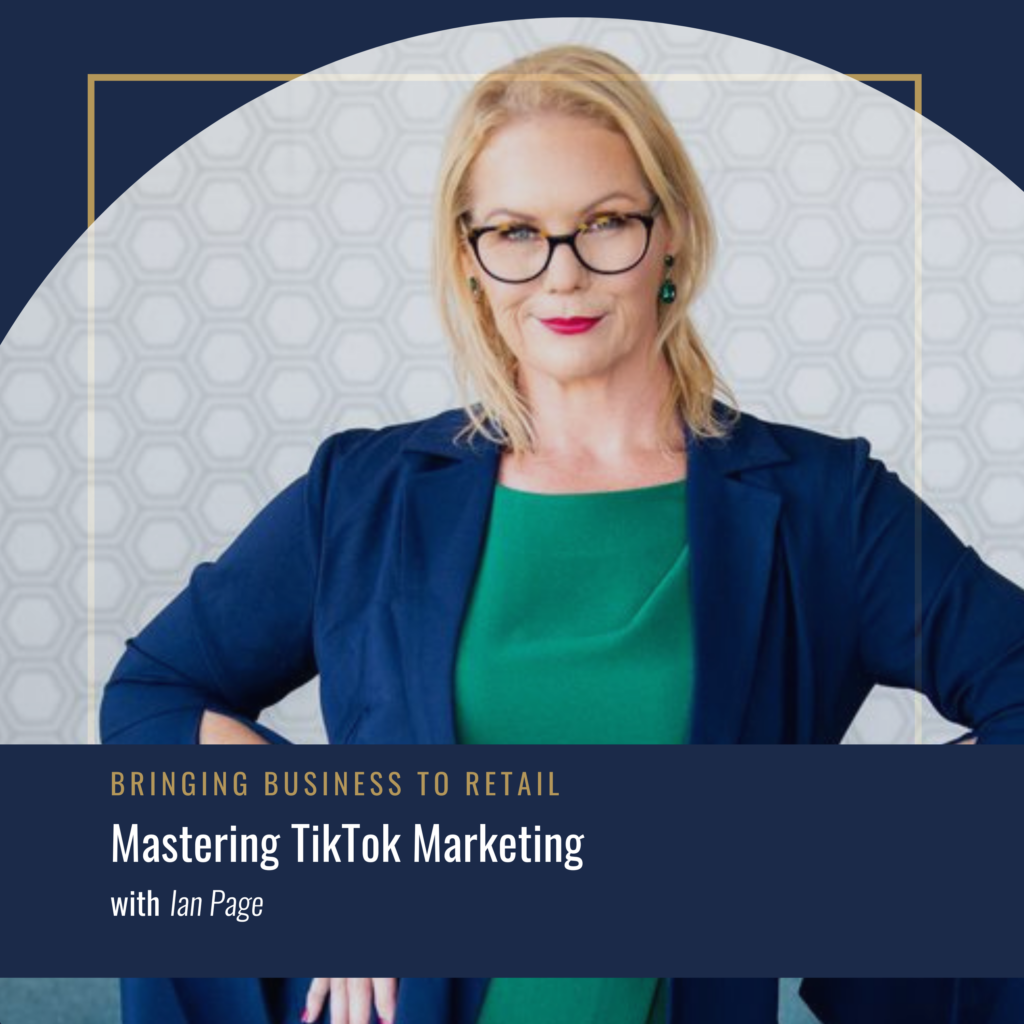
TikTok Shop can look like easy money from the outside, but it is not passive. It is a machine that needs constant feeding. In this episode, Salena Knight sits down with Ian Page from Bullseye Sellers to break down why most retailers fail on TikTok, what actually scales, and how to decide if TikTok Shop is the right channel for your product.
Ian shares the biggest insight his agency learned after months of testing across multiple brands: the product is the star, not the affiliate. When a product can clearly identify a problem, show a simple solution, and deliver a strong offer in under 30 seconds, it becomes a “movie star product” that can sell through creators at every level.
They also talk through the reality of sampling and content volume, why chasing trends is not a sustainable strategy, what happens when a shop hits critical mass and starts attracting creators inbound, and when you should adjust your offer to fix conversion.
If you are kicking the tyres on TikTok Shop, already selling but stuck, or trying to understand what “good” performance actually looks like, this episode gives you the framework, the benchmarks, and the mindset to approach TikTok like a retailer who wants profit, not vanity metrics.
In this episode, you will learn
- The “movie star product” principle and why the product matters more than the influencer
- The 3-part formula that wins on TikTok
- Why many products fail
- How to find the pain point that sells using creator testing and data
- Why chasing trends is not scalable, and what to do instead
- When to tweak your offer versus changing content
- The benchmark numbers for views and conversion on TikTok Shop
What “critical mass” looks like when creators start coming to you
LISTEN NOW on The Bringing Business To Retail Podcast




Salena Knight:
TikTok, it's a machine that needs constant feeding. But when you understand how it works as a retailer, you can make some serious money. Page from Bullseye Sellers, the fastest growing TikTok agency in the US is going to walk us through why most brands fail on TikTok and how you can turn the tables. Welcome to the Bringing Business to Retail podcast where we talk all about solutions that make more money for your retail or e-commerce store. Ian, here's what I know about fast. When we go fast, and we move fast, we often make a lot of mistakes. Is that true for you?
Ian Page:
Absolutely. I've made a lot more mistakes than I have not. I think we can all agree, especially with e-commerce.
Salena Knight:
Okay, so when it comes to the agency side of things, tell us how you've become the fastest growing agency.
Ian Page:
This year, we just really got dedicated and committed to TikTok shop. We are an Amazon agency through and through. We've been Amazon and DTC for many years, but I just saw the writing on the wall and honestly, we were getting beaten by a lot of TikTok brands and it pissed me off. So I went, that's it. If you can't, if you can't join them or what is it? If you can't beat them, join them. That was the impetus to really just go crazy and get as many accounts on board as I could this year. TikTok and Amazon are like entirely different platforms. That's like cheesecake and biscotti. It's like cheesecake and like vegetables. I mean, it's like, there's nothing similar. There's no knowledge that really translates from Amazon to TikTok or vice versa. It is a totally different planet than Amazon.
Salena Knight:
So when you said your goal was to onboard as many agents, as many clients as possible onto TikTok, did you mean from, from your current Amazon clients?
Ian Page:
That's where it started. The last thing I want to do is sign people up for a service that I don't know anything about. So what I did was I took a whole bunch of my Amazon clients and offer them a no retainer commission only deal because they've been clients of mine for years. So this is a perfect incubation to basically test and learn TikTok shop on guys who weren't already on TikTok and were excited about the upside of me figuring it out. So that's how we started. And then once we had our initial success, which was about five months in, that's how long it took to even get any success. Then we slowly started charging very small retainers. And then over the, over the years that obviously has gone up as our confidence has gone up.
Salena Knight:
But I have to ask you, I know people who, who have, sell on Amazon and for all intents and purposes, it's a very, and I'm going to use air quotes here. It's a very passive way of selling in that you put your product on, you can pay some money to move it up. can do some SEO, all that kind of stuff, but it's not like TikTok where you constantly have to produce content. So how did you get the Amazonians to okay with the amount of content that a Tik Tok account, my brain right now, I know how much content Tik Tok needs and it needs to be different and it needs to be trendy and all these kinds of things. So I just want to know, how did you convince them content wise?
Ian Page:
Great question. Everyone wants to chase gold, so it wasn't hard to convince them that there was gold to be mined. I think everyone was like, hey, what if it happens to me? Great. But yes, to convince them to do that much content was a growth-scaled, constantly-learned conversation. Because at first, I didn't know how many. So it's not like, it's not like I was like, Hey, we're going to need this much content out the gate. just knew we needed some content. And then we kind of learned as we go, as we went further that that amount of content was adequate or not adequate. And now I can definitely tell you where we need to be. have the numbers very much with all the different accounts that we manage, but it wasn't like overnight. I was asking for 2000 videos or 2000 samples. It was a growing quota, if you will.
Salena Knight:
So month five, you feel like you cracked it. And I think this is really important because as an agency, and this is what I want people to understand is you have resources, you have a team of people who are in there helping you do all of these things, but it still took you until month five, which I think is actually really quick, but it still took you that much time of just hammering away, chipping away, trying different things to see results. So would you be comfortable sharing with us maybe some of the things that didn't work?
Ian Page:
Yeah. And I can, I can tell you things that didn't work just yesterday. So I'm still learning on what didn't work. And that month, five felt like year five and we were managing about 12 brands. that's 12 times five months. Okay. That's not just one brand five months. So it felt like five years. You know what we, what we learned on that day in month five, which I remember the day, you know, waking up and seeing a product go viral. And what we have consistently relearned over and over again is that the product is the star, not the affiliate. So look at a, yeah, look at it like this. A movie star can make a, make a bad script, a good movie, you know, and there are situations. And I think Hollywood is a great example of this. There are situations where you put the right person in there and they can turn what would have been a bad production into a very profitable movie because they're the star, they're the magnet that brings the audience and the audience falls in love with them. It's the same with the product. And we found time and time again that you actually don't have to work hard when you have a movie star product.
Salena Knight:
Can we dig into that little bit more? Because I thought you were going to say something very, very different. I thought you were going to say, you can have a mediocre product if you've got like the great affiliate or influencer who is out there schlepping it. So please dig in and tell me some more about that.
Ian Page:
The truth is you can, but it just takes a lot more effort and schlepping is a great word because you are schlepping it and it doesn't scale really nicely when you schlep. It's going to have peaks and valleys. It's going to be a lot of effort. You're going to have to grind. But when you have a really great tick-tock product, you don't have to schlep anything and you're able to have success from micro influencers all the way up. And that day, that day where we had our first break, we realized that product specifically, why did that product take off was because that product is a star and that product kept producing and kept producing and is still producing sales to this day using the exact same formula that we started with.
Salena Knight:
Okay, I'm going to ask you about the formula, but can you tell us the product?
Ian Page:
Yeah, it's actually a very household, you know, simple mundane product. And it's an eczema cream.
Salena Knight:
Interesting.
Ian Page:
Yeah. So what is the formula of a great movie star product? I'll tell you exactly what it is. It's a product that very quickly identifies a problem, provides a solution and has a really good offer. Those three things. Identifies problem, really, really easy, simple solution with a great offer. That's, and the better the identification of the problem and the better the solution and the better the offer raises the movie star quality of that product. So with eczema cream, there's a very clear before and after and the customers were seeing that. They were showing their arms, showing the rosacea or the psoriasis or whatever the, there was multiple skin conditions in the arsenal for this product. People were applying it to their children, applying it to their babies. They were showing in 30 seconds the before and after of the of what the product was able to do. And then at the end, it was a great price. So it was a great offer. And that was at the end of the day, the simple formula that we have found works over and over again.
Salena Knight:
That sounds easy as someone who suffered from eczema, my daughter suffered from eczema. I feel like that's a really obvious, literal obvious pain point. It's like you have this problem, here's a solution. But how does this translate to someone who's selling fashion or someone who's selling cosmetics or somebody who's selling lingerie or just these, the markets are saturated. How does it work there?
Ian Page:
So at the end of the day, all of those products that do well and they lingerie markets or whether you're selling yoga pants or some sort of pair of jeans, you are very easily able to show the before and after. that is, and that's why clothing does well. It's very visual. Okay. The person is showing, look how great they look in this pair of pants. Look how great they look in this pair of boots. And it's not, it's not complicated. It solves a problem. It still solves a problem. I don't think I look great in jeans, but this woman looks fantastic in these jeans. Maybe I will look better in these jeans. And my God, what a great offer. It's the same formula. Where things get complicated is this. And this is why a lot of products fail. The product does too much, solves too many problems, isn't identifying a singularity, and is trying to go for two wide of a net of solutions and then maybe or maybe not is a great offer. So we actually have learned to distill down every client we have, whether it's these guys, you know, collodial silver, you know, whatever the product is, I have all these products here. What is the problem and what is the solution? I know there's probably 12 problems in 12 solutions. What is the one that we can focus on? Cause we have 30 seconds and we need to just hone in on one and close the deal.
Salena Knight:
People will struggle. What you're saying is literally marketing 101, right? That's exactly how we do marketing is a problem, solution, offer, call to action. And, but I think where a lot of people get hung up when they have products like fashion is that they don't know what the problem is that they solve. Now you and I can often see it because we're standing at exactly what you just said. I don't think I look good in jeans. For me. never find blouses. Like I wish somebody would come and just go, these are the blouses that you should wear because I am terrible. Jewelry. I don't wear jewelry because I can never accessorize. And so it is finding those pain points. But do you have any tips for how people can really hone in on not just a pain point, but it's got to be, like you said, it's got to be a pain point that we can push that somebody says, I care about that. Because again, we now have. You might have 20 different pain points, but if I'm the only person who has problems finding a blouse that fits, then there's no point using that angle. So how do we find the one?
Ian Page:
It's actually easy. When we're starting with an account, we ask that when we're onboarding the client, we ask what are all the pain points? What are all the solutions for this particular problem? And then we actually send out the affiliates different product briefs. Okay. Sometimes the product brief will have five options. So the affiliate can pick the pain point that's real to them. And affiliates are going to sell people what they want to hear or see. whatever pain point that affiliate has is probably the one they're going to pick. And then the videos come in. So now we have, let's say a hundred videos. We have 25 talking about this pain point. have 15 talking about this point. You have 10 talking about this pain point. And then we're to look at the data and we're going to find out that, wow, out of a hundred videos, the two that went really well and got some sales and got some traction were both on this one pain point. So now we distill it down from 10. to the one and then we just go, okay, have our, our survey says this is the pain point and we just go ham after that on that one painful.
Salena Knight:
Do you tend to find the pain point is not the pain point that the brand thinks is the pain point?
Ian Page:
50 % of the time.
Salena Knight:
Yeah, I'm thinking the same thing because I just think of all the marketing audits I've ever done and the founder or the brand thinks it's one. And I'm like, huh, I'm not really seeing that. But this is great in theory, but it sounds very expensive sending a whole bunch of product out to a hundred different content creators and bringing it all back in. But people who maybe don't have that budget or just don't want to go down that route. What are some other ways that they could be testing these out?
Ian Page:
I was going to make a joke and say then don't do TikTok. That's really important. think we should talk about that because you have just, this is like a full circle moment. said right at the beginning, I feel like TikTok is a machine that constantly needs feeding. Yes. And you've just, you've just kind of solidified that, which is you do need to be feeding the machine. You do need to be testing these things out on that. How, tell me how much content do we need?
Salena Knight:
Good question. Every product is different. So I can't give you a one size fits all. We have some products that are just so stupidly simple that within the first 15 videos, we got it. We have other products that are much more complicated. They handle a wide array of problems related to children or what it related to women with their menstrual cycle or whatever that area is. But there's so many angles and it's very nuanced. They might need three to 400 different affiliate videos for us to get our big break and learn what the most common and best pain point to communicate going forward. So it could be the first 10. It could be the first 500. The more complicated the product, the longer it's going to take. As simple as that. Here's a great example. We just onboarded a client that sells these giftable items. It's Q4. The items are funny. They're these towels with these wild slogans on them, you know, like a kitchen towel or a bath towel for your guest bathroom. And it's hilarious content on these towels. And I think the third video sold like 40 units, which is extraordinarily fast, but it's hilarious. The content just, it's a movie star. That's my point. The content just, it's just funny. And everybody just goes, my God, this is a great stocking stuffer.
Ian Page:
So those are the situations where it doesn't take a lot. And then you have situations like this colloidal silver, highly complex product, good for so many different dietary reasons where this brand, this is going to be an interesting puzzle to solve over time. So that's why I say it takes patience and not, it's not for everybody because you might be in that, you might be in that, you know, 500 video spectrum and you might not have the patience for that. And we, when we onboard clients, we always give them worst case scenario every single time. So I want to tell you something else that's kind of exciting because I feel like I'm just talking people out of Tik TOK, but I want to, I want to, I want to also talk people into Tik TOK because of some of the really interesting things that they don't know. The cool thing about feeding the machine is it's kind of like a sourdough starter or like, you know, planting a bunch of, a bunch of herbs in your garden. There's a point where it hits critical mass and they just turn into this wild forest or weeds or whatever. And that is usually at the point when the store is doing significant volume of revenue each month. Let's just say six figures or higher every month. Where all of a sudden people respond to the DMS. All of a sudden people are reaching into the brand. The daily open collaborations, which what open collab means is those are people reaching in wanting to rep the brand instead of you reaching them. You're seeing people that are like half a million dollars in sales per month. You're seeing people that you couldn't pay them $10,000 upfront just to get them to respond to a message. So it feeds itself at a certain point. Does that make sense?
Salena Knight:
does make sense and my, I guess my next question would be trends. My content creator who comes in and helps me create content is constantly at me with trend. said every week she sends me just try and do one of these, just try and do one of these. And I'm sitting here thinking, but as an agency, how does that translate? Because I know that when I send ads to my agency, they want them four weeks in advance. A trend lasts, I don't know, what 48 hours, maybe a week on TikTok if you're lucky. So how, how does that work?
Ian Page:
We don't chase trends at all because we want to create, we want to create a formula that we can use for a lot longer than a trend. Chasing trends is like chasing the stock market. It's just not a, it's not a scalable business. If we have a formula that problem identified solution, a great offer, we're pretty certain that that formula is going to work for a good amount of time. Maybe not forever, but we think we can get through the year. by repeating that over and over again. Case in point, Mary Ruth Organics, one of the top sellers on TikTok Shop. I think this year they're gonna do $70 million of revenue on TikTok Shop. That is crazy. Yeah, and I'm really good friends with Jay. He's the CMO and I picked his brain. We've done webinars together and I've really had an opportunity to poke at him and I keep trying to look for the magic formula. And every time I come to him with, Crazy!
Salena Knight:
trying to find the magic formula he always goes with. We just do the same thing over and over again because it works millions of times.
Ian Page:
It's interesting because I have a saying, is like, do more of what works. Simple. But as when we run our own businesses, we seem to be so adverse to actually just doing things that work. want to tinker with them. We want to try new things out, but $70 million on TikTok doing the same thing has something, has a bit of a ring to it, doesn't it?
Salena Knight:
It does. And it's funny because I think a lot of people don't like that. I think it's too boring, right? It's just boring. It's like, and they want to hear that they, or they don't want to hear that. They want to hear, Hey, so there's this little thing you can do over here with AI or, know, some sort of hack. And that's what they want to hear. But at end of the day, they only promote one product on Tik TOK. They'll give the samples to anybody with a pulse. So they're not looking for 26 year old blondes. They're just literally anybody with a pulse. They send everyone the exact same brief. Here's what to say, here's what not to say. And they've scaled to $70 million. So what does that tell you? They're not following trends. They created their own trend. They are the trend.
Ian Page:
think what, I mean, that has a ring of, I mean, it's true, but I can see why it works because like you just said, they create their own trends. But what I would, how I would explain that would be they've created a narrative that people instantly associate with them. And so it's the same when you walk into, you know, if you walk into an anthropology store, they are, they all look different.
Salena Knight:
But they're the same, you know, they have a specific type of furniture, even though every store is going to be different. If you walk into, you know, a target, you pretty much know, regardless of the layout, that things are going to be with other things. And it's because they have created their own narrative. And so that's what I would say. What you've just, what you've just explained to me, like creating their own trend to me is just that narrative that people associate with that brand and anything outside of that starts to become incongruent and they're just, and customers will be thinking, is this Mary Ruth organics? Like, I'm a bit confused.
Ian Page:
The problem is, to your point, is that a lot of people who come to TikTok are smaller brands. Most of them are mom and pop, five million, eight million, 15 million. They don't even know what their brand is. They're on Amazon. They tinker with SEO and images, yeah, but they don't really know until they go on TikTok. They haven't actually found their identity. TikTok will make you find your identity. Who are you? And that's what's incredible about it, is because you actually really discover what your brand is, who's your customer, why do they care? And like we said in the beginning of this conversation, half my clients think they know, but they're wrong. And TikTok will basically expose what they don't know and reinforce what actually the customer cares about. And once you figure that out, why would you ever go a different route? Just stick with it. Keep going on that vein. So we had this bath toy company. These super cute little light up bath toys. just pop them in water and they light up and they have like fire trucks and police cars and they're just adorable. Right. The first video we had take off. One of the affiliates was smart enough to turn off the lights. That's it. That was it. Turn off the lights so that when the bathtubs lit up. Woo. It was like this, like beautiful movie star moment where the product was the star of the, of the video and the affiliate would just.
Salena Knight:
point of view videoing, you you could just see her hands and you couldn't even see her face and she was just narrating it. Probably took her five minutes. That video sold over a hundred thousand dollars. Guess what that that video has done. Every, I swear to God, every single person now who is representing this brand is turning the lights off and doing a pretty strong, very, a pretty similar variation of the same video.
Ian Page:
And that account now is doing $330,000 a month and we spend no money on ads. It's all viral. Just from turning the lights off. created their own narrative, but that was accidental. There's no, most people are not going to provide a brief that says, make sure you take the light. Like we wouldn't even think about that. We're thinking about kids enjoying the bath time. We're thinking about fun and making bath time easy. And we would have come up with all these other ideas as to what the pain point was. And the pain point was never going to be, make sure you turn the lights off to make this work. That was the problem solution. The problem was kids were not entertained enough in the bathtub, whatever that problem is. And when the lights go off, the entertainment value goes through the roof and now the kids are in a disco club, just having a great old time and it lights up the room. And you're right. It's on accident. So that's why, even if you think, you know, the formula, you have to be open and you have to be willing to just send product out and let the affiliates take your advice, but create their own content. And only TikTok can allow you to learn from that type of basically, you're basically case studying your own brand with human beings, trying it and putting in a video. And then when a video does well, you've solved your question of what works and you thought you knew, but you usually you don't.
Salena Knight:
Can we just finish up with, I just have one question that's come up about, I've been thinking about it as you've been speaking, which is TikTok seems to be a very unique platform. You've made it very, very clear that how you market on it, how you present your offer is very, very different to your Facebook and your Instagrams. So does your offer have to be different?
Ian Page:
I get less into the offer when the content sells itself, but sometimes I have to dial in and we have situations where the content does great. It's engaging. People are commenting, but they're not buying. And that's the situation where you have to go e-commerce one-on-one. What's stopping the abandoned cart? What's stopping the lack of conversion? And in those situations, we will modify the offer. We'll create a bundle deal. We'll create a BOGO offer. And sometimes we have to have that extra little hook and extra little spice to get the person to get off the couch. Because remember, TikTok is disruptive marketing. The person watching the video is not searching light up bath toys in their search bar. They're sitting there looking at who knows what on TikTok. They're probably half asleep, half brained in, because that's what TikTok unfortunately does to most people. And your video comes up and in 30 seconds, you got to get a person to click checkout. So that is the other challenge with TikTok that you don't have with Amazon is the fact that you don't have buyer intent and you have 30 seconds to convert that customer. So yeah, we definitely have to modify the offer sometimes. And we usually figure it out once we get the views and the engagement and we know we have the right, we have the right concept of like problem identified solution provided. Then we know we just have to do a little tweaking on what the offer is.
Salena Knight:
Yeah, we're just looking at traffic versus conversion. And if conversion is the problem, the offer gets changed.
Ian Page:
Yeah, exactly. So I want to, I want to give some hard numbers for your audience. Cause I think anyone listening to this would love hard information. So a good shop is getting between 10 to 30 million views a month. Okay. Yeah. Yeah. That's what they're getting. And an incredible shop is getting just, you know, way above that, but a good shop, like when you know, you have a shop that's actually got potential to scale, you're starting to get five, eight million of these a week. In that you should see conversions of if you're a fair shop, meaning your offers aren't really that exciting, but you're still making sales is one to 2 % conversion rate. Okay. Yeah. And I know that sounds low, but realize it's disruptive marketing and it's high volume.
Salena Knight:
Okay.
Ian Page:
thought it sounded quite high because I'm thinking 2 % on e-commerce when someone came to your website looking for something. It's different because I'm not referring to every person that watches the video. I'm referring to every person who clicks the shopping cart is one to 2%.
Salena Knight:
Got it. Got it. Thank you for clearing that up.
Ian Page:
Yeah, and I'm glad you brought that up, because I could see it in your eyes. You were probably thinking based on the amount of people watching, which I would have thought too.
Salena Knight:
Yeah. And I'm sitting here thinking, why do we even have websites?
Ian Page:
Yeah, no, it's one to 2 % of people who click one what's called the product card. Okay. A great shop is two to 3%. That toy company I'm telling you about is about 2.75. A viral shop like the Mary Ruth's, the guys that are just this massive snowball just going downhill and obliterating everybody in their path, they're three to 5 % conversion rate. So. You're dealing in a high volume game here. If you're doing, if you're just trying to get 2 % realize what you have to do and how many people you need to watch the video in order to scale that account. So just want to put that in people's, into their heads so they can think with, maybe I should be doing bigger amount of sampling.
Salena Knight:
think it's great to have that benchmark because if we don't have the benchmark, how do we know what we're working towards? You've shared so much. If I could just ask you, and I didn't ask you before we came on, could you finish up by telling me if you were going to take a product to TikTok, you personally, to make bank, what would it be?
Ian Page:
product that I just launched.
Salena Knight:
Which was the bath toys?
Ian Page:
No, personal brand. Just launched it. Literally it's brand new. I launched an instant coffee that comes in six different levels of caffeine. So I have to say that's the product because I saw a gap in the market because I'm a coffee drinker and I love the idea of having different levels to choose from. If you're a half calf person, if you're an extra strong person, if you're a decaf person, we provide six levels all the way through. what I would say.
Salena Knight:
We're going to to share the name so that we can all follow and watch what you do.
Ian Page:
It's going to be great. And we're on Amazon. just launched. We're doing fantastic on Amazon. It's selling beautifully. TikTok's the next big thing and we're just now getting started. So I would say, remember that TikTok's a visual platform. So any product that you launch really needs to be the star of the show. And if it could very quickly identify the problem and the solution and you have a great price point. You're going to do fantastic no matter what category you're in. Okay. So. And if, and I'm not referring to like my problem, my product helps you sleep better because it's a magnesium glycanate. That's a little bit more of a mundane example. I mean, it literally is like a problem identified and a unique way to solve that problem. That's visually stunning on camera. That's more important than the problem is how easy it is to demonstrate. You know who the top seller is right now on TikTok? The top seller? Shark. You know, they make like blenders and they make vacuums.
Salena Knight:
ninja bullet things. Yeah. I can see why though, because like I said, it's visual. So it's
Ian Page:
It's so beautifully visual. They have people making smoothies and this and that, and they're just absolutely dominating TikTok right now. So it's just, it doesn't have to be a brand new idea no one's done before. Like my coffee idea, is really, which is exciting, but it doesn't have to be like that. It could just be something that just visually identifies the problem and solution. And you're going to eventually hit the mark. And then all you have to do after that is just do the same thing over and over again. Okay.
Salena Knight:
So name of the coffee brand in.
Ian Page:
It's called cough free.
Salena Knight:
Okay. We'll pop the link in so we can all go and cyberstalk you on TikTok. And if people are thinking that your agency might be able to help them, whether it's on Amazon or TikTok, where can they find you?
Ian Page:
Bullseye sellers.com.
Salena Knight:
Fantastic. Thank you so much. This has been really informative.
Ian Page:
I hope that I can add value to people that are kind of like kicking the tires of TikTok or they've started the shop and they don't know what to do next. But if you say that you came from this pod, I will tell my sales team to invite me to the call. So I will be happy to jump on the call for anybody that books a call. And I'm not going to sell you TikTok, trust me. I'm probably going to try to talk you out of it. And if you're still on the call after I try to talk you out of it, then we might be, we might be a good fit.
Salena Knight:
That's very generous of you, thank you.
Ian Page:
Yeah, yeah, yeah, yeah. I'm always, very honest with that. So if your product isn't a fit for me, I'm not gonna sell it. I'm not gonna try to sell your product. I'm gonna be super honest. But if I love your product and I think it's a great fit for TikTok, then I'm gonna try to seal the deal because I wanna represent that brand.
Salena Knight:
Thank you so much, Ian.
Ian Page:
Thank you, Salena.
Salena Knight:
So that's a wrap. I'd love to hear what insight you've gotten from this episode and how you're going to put it into action. If you're a social kind of person, follow me at thesalenaknight and make sure to leave a comment and let me know. And if this episode made you think a little bit differently or gave you some inspiration or perhaps gave you the kick that you needed to take action, then please take a couple of minutes to leave me a review on your platform of choice. Because the more reviews the show gets, the more independent retail and e-commerce stores just like yours, that we can help to scale. And when that happens, it's a win for you, a win for your community, and a win for your customers. I'll see you on the next episode.
Ian Page, CEO of Bullseye Sellers, who’s helped hundreds of ecommerce brands scale fast through TikTok Shop, the platform that’s redefining how consumers discover and buy products.
Ian shares real-world insights on what’s driving 6-figure months for small brands. He brings data, live campaign experience, and actionable tactics that could give you an inside look at how the TikTok Shop ecosystem actually works.
Share this episode
Watch The Video
Ready For More?
What can a rich man handing off a trash wrapper teach you about business? More
Facebook-f Instagram Linkedin LISTEN NOW SHOW NOTES Most retail and ecommerce business owners are exhausted,
Learn the insider secrets of retail buying with Erica Kiang, founder of Babel Fair Showroom