


SHOW NOTES
Why do customers ignore review requests, newsletter signups, and referral programs even when they love your products?
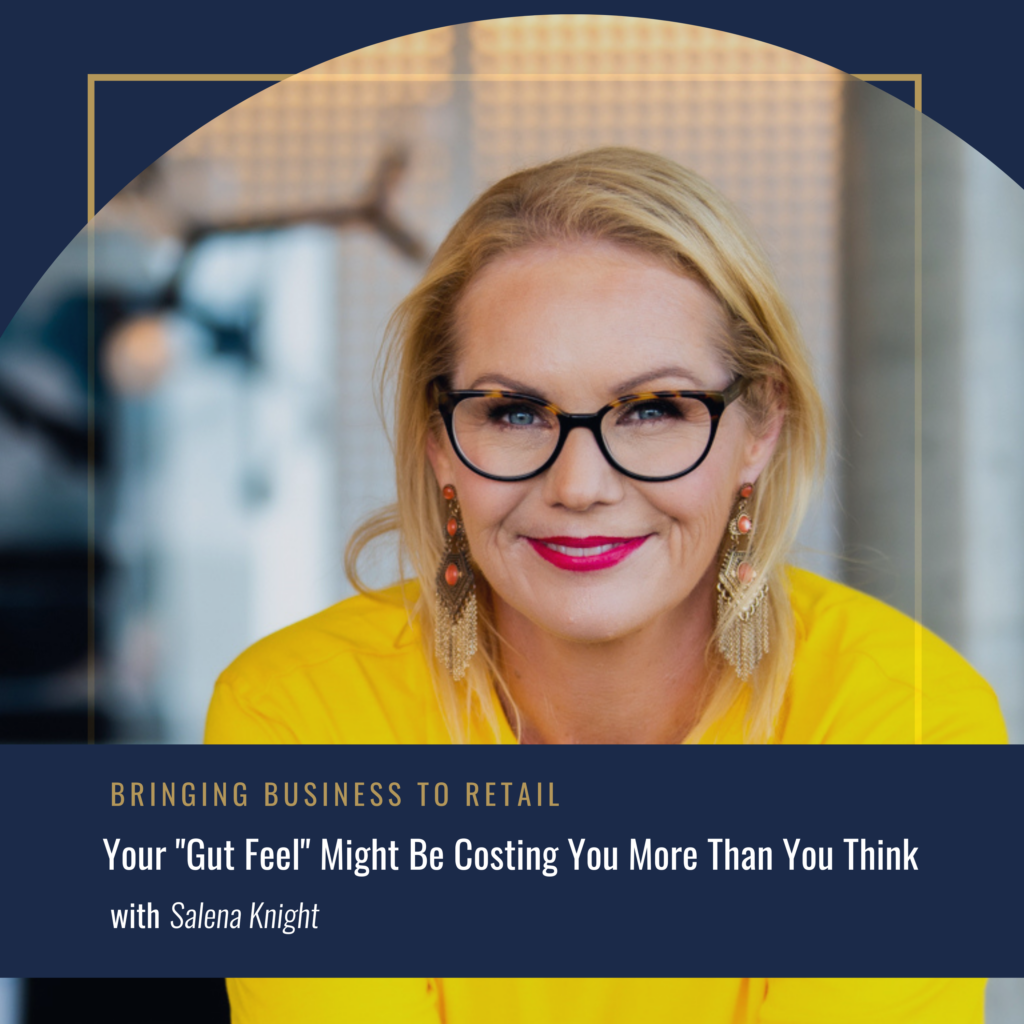
In this episode of the Bringing Business to Retail podcast, Salena Knight shares a simple but powerful communication strategy that can help retail and ecommerce businesses increase customer participation without changing their marketing systems or spending more money on advertising.
Using examples from both physical stores and online retail, Salena explains why customers are more likely to say yes when requests are framed around helping others rather than helping the business. Whether you’re asking customers to leave a review, join your email list, share a photo, or refer a friend, the language you use can dramatically impact the response you receive.
You’ll learn why traditional review requests often fail, how retail sales associates can generate more customer-created content in-store, and why the most successful brands position customers as contributors rather than consumers. This episode also explores practical ways to improve newsletter signups, increase customer advocacy, and create stronger emotional connections with your audience.
If you’re looking for simple ways to improve customer engagement, increase loyalty, and generate more social proof for your retail or ecommerce business, this episode will give you actionable ideas you can implement immediately.
LISTEN NOW on The Bringing Business To Retail Podcast



Yesterday, I had to buy a trigger point ball. Now, I don't know if you've ever used one of these things. It's like a tiny little squash ball. It's about an inch across. It's rubber. It's also really, really hard. It's a little bit squishy, but it's actually really, really hard. So the idea is that you use this in different areas of your body when your muscles have tightened up, and it helps release them. It hits all those trigger points. It's great if you have nobody around. To do a massage, or you can't get to the chiropractor. Now I have no cartilage left in one of my spinal joints, which means the muscles on my right side quite often tighten up when I do a lot of exercise or I've been sitting a lot. And that trigger point ball is a blessing and a curse. It's a blessing because it does help release those muscles that have locked up. It is a curse because it hurts to high heaven. I quite often use the trigger point ball when I am lying here on my office floor. And while my office is not massive, the other day I could not find that ball for love nor money. I mean, it's this big. I looked under the shelves, I looked under the desk. I mean, my office—where else could it be? The reality is, I can't go a day without using one of these balls. So, I don't know—they cost about five dollars. For me, it was just easier to go and buy another one. I figured I would just throw it in my travel pack if if the other one turns up. But I also knew that there was no chance that I could get to the store soon. I had a whole afternoon of calls scheduled, and then I had at the gym in the evening. There was no way I was getting to a shop before it was going to close. What do I do? I needed to buy one. Of course, I head over to Google Shopping. Isn't that what you do? And I try to find the right ball for me that could be dispatched like tonight. And so I don't know about you, but here's how I shop. If I need to buy something, the first thing I do is go to Google Shopping, and from there, across the top, I will usually choose from the pictures or the heading of the product. So sometimes I look at the pictures, sometimes I look at the heading if I'm looking for something specific. Then I go to see if there are any reviews. So in Google Shopping, there will be little stars, and it will tell you what the average rating is. Now at this point, remember, I am still all up inside Google Shopping. I have not clicked anywhere else. Hey there. I'm Selena Knight, and welcome to the Bringing Business to Retail podcast, where we talk not just about trigger point balls, but also all of the ways that you can make money and grow your retail or e-commerce business. So, when it comes to shopping, my preference will always be—I'm guessing I'm like everybody else—I'm always looking for the the product that has the highest number of stars and the highest number of reviews, followed closely by the stores that I have bought from before because I already know how long things are going to take to dispatch. Or that I can get to that shop before it closes, so I will use my Google Shopping, and then I will click through to the website. I look at the heading, I look at the picture to make sure I'm on the right page, and then I go straight to reviews. Now I'm sure that I'm not alone in that. Most people do exactly the same thing before they add to cart, before they read the full description, before they check the shipping. They go to the reviews because the reviews are going to tell them what the product description. Can't. They're going to tell you whether it runs small, whether the color is actually what it looks like in the photo, whether it's going to hold up after a few washes, whether somebody with a similar body type to them has found that it worked. In my case, how firm or how squishy was this ball going to be? Whether other people using it for the same trigger points that I need to use it for, the reviews answer the question that the product page doesn't. Here's why I'm telling you this. This episode is not about reviews. Wait for it. Stay with me, because if you have a product, whether you're selling it in store or online, there's going to be a customer who has already bought that thing from you and loved it. They are out there. She knows whether it runs small. She knows whether the color is true to the photo. She knows whether it held up. She knows whether you have great customer service in store. She knows about your range, but she hasn't told anyone. Not because she doesn't want to, but because. You've asked her in the wrong way. So, like I said, let me be really clear. This is not an episode about reviews and why you need to collect them. I'm all for collecting reviews at all times. That was just an example I was giving you to help put you in the right frame for what I'm about to say next. So, let me give you a picture of what I mean. So, if you have a clothing boutique and you know that you either have a stylist on the floor or that your sales associates are great at picking. For your customers, you've got someone who is great at their job. I'm just going to call it a woman. Just go with me here. She asks all the right questions. She will pull the right pieces. She can look at any woman and know within. Thirty seconds. Which cut of jeans is going to work for her on her body? If you have that person, can you please let me know? One day, a customer is going to come in, and she has been dreading jeans shopping because, let's be honest, I don't know about men, but women always dread jeans shopping. Nothing ever fits right. Maybe she's got a longer torso and shorter legs. I wonder where this example came from, or she's in between sizes again. I wonder where this example come from. Whatever it is, she's tried everything. But your super amazing stylist sales associate works with her for fifteen minutes, pulls three pairs, nails it on the second one. The woman comes out of the fitting room. She's standing there looking at herself in the mirror, and she genuinely looks great. And she knows it. You can see it all over her face. Your stylist has done something really, really difficult. She found a pair of jeans that fits a real human body. That amazing sales associate of yours has your voice in the back of her head saying, "We need to use these kinds of transformations as part of our social media." Your stylist, your sales associate—they know that they need to be doing this. They want to capture this moment: a photo, a quick reel, something that you can actually use, and they can feel like they have—they've done their job of getting that content for you. And so, what does your sales associate do? She says to the customer. Would it be okay if I take a photo? The customer pauses. Now it's a little bit awkward. She says she's not really a photo person, or maybe I'll think about it. Your stylist, sales associate, they smile, they move on, they assume customers are just very private people and nobody wants their photo taken. Next customer, same thing happens. So that sales associate keeps wondering. Why she can't get the content that you keep asking for, and you keep getting more and more frustrated because this should be really easy. You know how good she is. Here's what's happening: nine times out of ten, in this scenario, your sales associate is going to ask, "Would it be okay if I took a photo?" What they're doing is asking for permission to use this woman for something. I know, I know, I'm I'm over analyzing it here, but stick with me. The customer. Can feel that even if she couldn't put a name on it, she's being asked to be your content. She's being asked to help your business, and she doesn't necessarily care about your business. She just came in to buy jeans. But there is a way to change all of that. Let's look at what happens if you flip this entire scenario. What if, instead, after that moment in the fitting room? After the customer is standing there, looking at themselves, feeling amazing, your stylist or sales associate said something like, "I love this on you." We have a lot of women who come in here who have actually just given up on jeans because nothing ever fits right. Would you be up for letting me capture this? Because women who look like you need to see that the perfect pair of jeans is actually possible. That is the same ask, but it is a completely different reframe now. She's not being asked to be content anymore. She's being asked to help be the answer to someone else's problem, and that, my friends, is a much easier yes. It's a little bit of ego, it's a little bit of flattery, and it is a whole lot of being helpful. And everybody loves to be helpful. That's an example of how this works when we're working in store. Let's take this online. Same pair of jeans in an e-commerce scenario. A customer orders a pair. They arrive. They fit perfectly, which, if you've ever tried to buy jeans online, you know it's basically a miracle. She's happy. She would genuinely recommend them. Now, people are a little bit different when we buy online. We know that there's a good chance that people are going to ask us for reviews. So a few days later, she gets the email: "We'd love you to leave a review," and she means to do it. She actually intends to do it. I mean, hey, how often do we buy a pair of jeans online and they fit perfectly? She opens the email, she clicks through. Life happens. The phone rings. She closes the tab and she never comes back. It's not that she doesn't want to help you. It's that we'd love a review is all about you dressed up as a request to her, and her day is full of her needs, other people's needs. It's not about you now. Think about what it would look like if that email said something a little bit different, something like your advice matters. If you love your jeans, or hey, even if you didn't, there is someone out there right now trying to decide whether to buy them. And they need to hear from someone who has actually tried them on and worn them. Would you share what you think? She's not being asked to leave a review. She's being asked to share advice that is genuinely useful to someone in the exact same position that she was in a week ago. That is a completely different ask. It gets a completely different answer, and it has a completely different motivation. Like I said, this is not about your review strategy. I'm not telling you to overhaul your email marketing or to run a campaign. That's not the point of this episode. The point is there is a pattern underneath how we ask our customers to do something for us. Are we framing it as an ask that is all about us, or are we making it about the customer? Because the same thing is happening in every single place that you ask your customers to do something. Here's another one. Think about your newsletter. If you have a physical store. And your customer is at the point of sale. How do you ask customers to sign up to your newsletter? I'm willing to bet it sounds a little something like this: Do you want to sign up to our newsletter? What are they going to do? They're going to say yes. They're going to say no, or they give you an old hotmail address that they never check, or they say sure, and then they immediately unsubscribe because do you want to sign up to our newsletter? Is asking somebody if they want more email. Who wants more email? But what if instead you said, "I'm going to add you to our VIP list so that you are the first to know when new stock comes in." I wouldn't want you to miss out. Now you're not asking them to receive email. You're including them in something worth being a part of. You are telling them what they get, what it means, why it matters, and then you're adding them in. You are confident. You are warm. There is no awkwardness. That same shift works online. If your pop-up says, "Sign up for ten percent off." That's just a transaction. You're asking for people for their email address. You're offering a bribe in return. We know that the people who take that are usually not the customers that stay and spend a lot of money. Some people are going to take it. Most won't because they know what comes next: an inbox full of promotions that they didn't really care about. But what if? What if your pop-up said something like, "Be the first to see new arrivals before they hit the shop floor." I'm not going to say that it is the Best thing that is going to convert. We know ten percent off converts, but does it convert in the long run? Does it convert to give you the customer to be the motivator for the person who's going to spend the most amount of money with you? Because now we're not signing up just to get ten percent off. We're signing up to get access to something. We're being made to feel like we are going to be an insider. It's the same outcome, but it comes from a completely different emotional position. For your customer to say yes. From too often in business, when we want something from our customers, we just ask them. We make it all about us rather than making it about them. Right. So here's what I want you to do with this: pick one thing that you regularly ask your customers to do. It could be a review. It could be taking a photo. It could be the newsletter sign up. It could even be something like a referral. Doesn't matter what it is. But then. Look at the exact words that you use. Who is the frame on? Is it on what you want or what you need, or on what your customer gets, what she contributes, why it matters to her? That's the only question. You don't need to rewrite everything today. I just want you to think about one thing that you do every day, one ask, because when you find it in the one place, you start seeing it everywhere. Every ask you make to a customer. Has two versions. Most owners, most sales associates, are just using the wrong one, and the gap between those two versions is not just a review or a newsletter subscriber. It's a difference between a customer who does one thing for your business and disappears, and a customer who actually feels like they are part of something. And that customer tends to be the one that comes back. Tends to be the person who tells other people about you. Thank you so much for joining me here on the Bringing Business to Retail podcast. I know you are a very busy store owner and Your time is valuable. It's probably the most valuable thing that you have. When you take a moment to leave a review of the show and let people know the value, those little gold nuggets that you've taken away from this podcast, it helps other business owners make a decision about whether to listen to this podcast and whether it's right for them. See what I did there? Thank you so much for listening. I'll see you on the next episode. So that's a wrap. I'd love to hear what insight you've gotten from this episode. And how you're going to put it into action? If you're a social kind of person, follow me at the Selena Night and make sure to leave a comment and let me know. And if this episode made you think a little bit differently, or gave you some inspiration, or perhaps gave you the kick that you needed to take action, then please take a couple of minutes to leave me a review on your platform of choice. Because the more reviews the show gets, the more independent retail and e-commerce stores, just like yours, that we can help to scale. And when that happens, it's a win for you, a win for your community, and a win for your customers.
Share this episode
Watch The Video
Ready For More?
Your best product picks aren't always your best buying decisions. In this episode, Salena explains
If your promotions are not converting, the discount is probably not the issue. In this
When retail marketing underperforms, most founders react fast. They change offers, increase discounts, or blame