

SHOW NOTES
What does it take to build a retail business that is profitable, deeply connected to its community, and still growing years after opening?
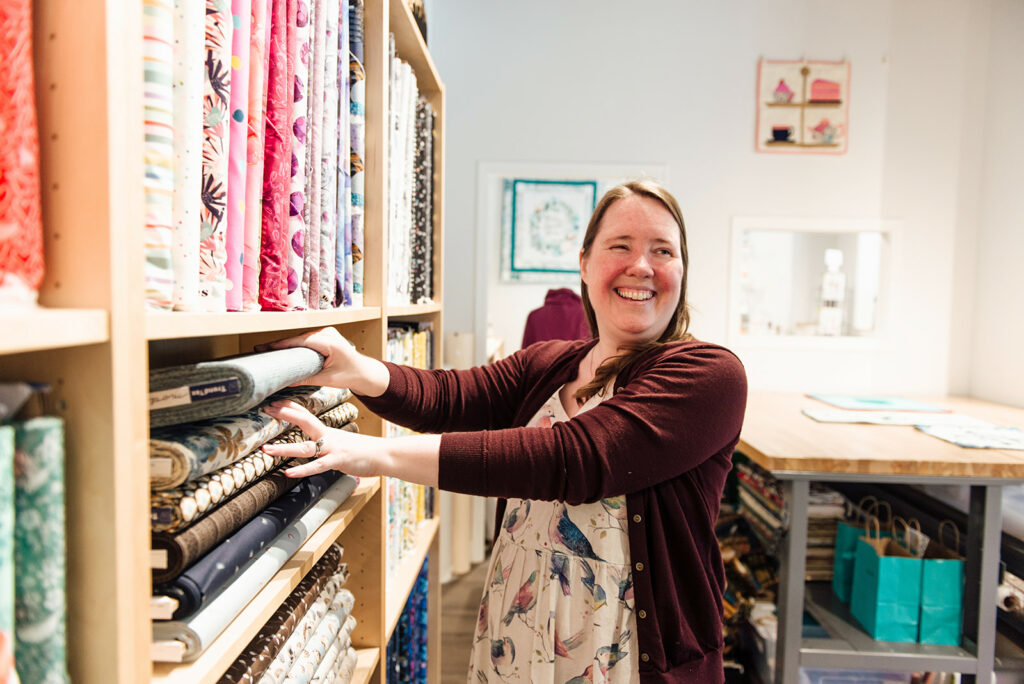
In this episode, Salena chats with Jill, CEO of The Stitchery Studio, a fabric shop and studio that has grown from one person’s dream into a thriving creative community.
Since opening in 2017, Jill has taken a considered approach to modern textiles, combining retail with education, creativity and connection. The result is a business that gives customers a reason to keep coming back, while continuing to evolve and grow.
And the numbers are worth paying attention to. Jill shares how The Stitchery Studio has grown sales by 30% and increased profit by 40%.
But this episode isn’t simply about the numbers. Jill shares what sits behind that growth, including the importance of building the right team, creating experiences customers value, expanding into new areas such as leather work, and staying committed to a vision that is genuinely her own.
Jill also talks openly about why she started the business in the first place. For her, retail is about bringing together her passion for craft and community with a need she saw around her: creating connection and countering isolation and loneliness.
If you’re a retailer looking to grow without losing sight of what makes your business different, this conversation is full of practical ideas to take away.
If you’re building a retail business that you want to be both profitable and meaningful, this episode is worth a listen.
Register for the free masterclass series here.
LISTEN NOW on The Bringing Business To Retail Podcast




Salena Knight (00:00)
For most people, 2025, we would call it hard. But if you're a retailer and your profit is up 40%, your revenue is up 30%, your classes are selling out, and you have just had international recognition, then you know what? 2026 is pretty good. These are just some of the things that Jill Schuler has managed to achieve over the last 12 months in her business. But it's not always unicorns and rainbows. Success is
Don't come without hurdles. Welcome to the Bringing Business to Retail podcast, where we talk all about ways to make money in your retail or e-commerce store. And Jill Shuler, I feel like such a proud mama bear to have you on the show. Welcome.
Jill Schuler (00:43)
Thank you.
Salena Knight (00:44)
International recognition. Now I'm gonna start off with: I think that the team and I were more excited about this than you were. Being chosen.
For these Japanese ambassadors of a global brand to come into your store. my gosh, you can tell the people how excited the team and I were about this. How did this happen?
Jill Schuler (01:07)
I ran a fabric store. But the heart of what we do is classes. So we like to teach people to sew and quilt. And that's our studio and we sell fabrics both online but mostly in person. And we like to get together and celebrate everything that's new and exciting about quilting. And for the last nine years. Yeah, we've been here nine years. So we were contacted by Panasonic, who said that they are wanting to understand quilters better.
And I guess they want to launch a new iron that is focused on quilters and that they would love the opportunity to come and meet with my team and bring some visitors from Japan and talk with us. And I was like, that's odd, but okay. Yeah, you guys were like, wow. And I'm like, I this is not something that was even in on my radar. So I was like, I don't know. But it was really fun. Yeah. So we had a couple of gentlemen from Japan.
One was the head of the Irons and Vacuums department, apparently. And yeah, they brought lovely Japanese treats for us and we exchanged gifts and they had the irons out and we were playing with their irons and we were telling them which bits we liked and what we didn't like, and we were asking them questions and they were asking us questions and they were busy scribbling all these notes. And it was just it was a really fun interaction.
Salena Knight (02:31)
Think it's I was telling my daughter about this. So, for those people who've been listening for a while, you know that my daughter went to Japan on exchange for school last year for a whole year. And I said to her, one of one of the retailers that we work with, the people from Panasonic are coming, the Japanese are coming. And she's like, Is she famous? And I said, Well, what do you mean is she famous? And she goes, Well, that's that's a very big thing for the Japanese to come to your like she's famous, right? And I was like, Well.
You know, I think she's pretty awesome and you know, and she said, no, no, I don't think you realize if you go to somebody's house or if a company chooses to come to your business, they hold you in very great regard. And so I was back, you know, back to saying to you, you need to go and buy them some gifts. This is how it works. Like you need to have have some people taking photos. So this is a big thing. And it was it was probably even bigger than even you and I even realized until my daughter was saying that.
It puts a lot of trust and a lot of esteem towards your brand. They obviously, whether it was them or or whoever recommended you, they ha hold you in a very high regard. And that is just a testament to what you have built up over nine years. I know I've said this before, but congratulations. Thank you.
Jill Schuler (03:45)
Thank you.
Salena Knight (03:46)
But it hasn't always been easy, has it? I mean, I'm just going to just cook call something out here because you said right at the beginning, we're a fabric store. We sell online, but mostly in store.
I'm gonna call that out because you have had a huge increase in online sales over the last twelve months. Do you happen to know I don't have the numbers right in front of me, but do you happen to know what those numbers are percentage wise?
Jill Schuler (04:09)
I think
percentage wise when I'm looking at I haven't looked at all of that at year-over-year, where it's somewhere around I think about the same as our revenue. We're up about twenty-five to thirty percent on most days.
Salena Knight (04:21)
That is ridiculously amazing. So I think this is one of the things that we do as business owners is we forget the accomplishments. Like in the first five minutes, you've had two amazing wins. Not even the ones that I called out, but the ones that we just talked about just then. International recognition, 30% up in online sales. We have to stop and celebrate these things. I think it's so easy to just keep moving on. I would love to know your insight. Why do you think
As business owners, we struggle with our success.
Jill Schuler (04:55)
Think we struggle to look from the outside in, unless somebody else, like yourself, sort of sees it from the other perspective. I think it's a little bit that. And if a lot of other business owners I feel are, you know, like me, you're a risk taker, but you're also a high standards person. And so my standard is always here. And then when I get even close to it, I move it here because I'm like, I'm too close to that one. I gotta move this, like, that's too easy. I gotta move it up. And so you
Never feel like you hit the bar, even though you pass that bar and you go towards the next one. I don't know.
Salena Knight (05:32)
I think one of the things that I struggle with as an owner is a founder, owner, whatever you want to call it, is that constant raising of the bar, the team can struggle with that. Because we are already thinking 10 steps ahead. We are already on the next project. We are on the next adventure. They're just catching up. They're like, well, we just did this thing. Now we're going somewhere else. Is that something that you find? Yes.
Jill Schuler (06:00)
And it's feedback that I've got, you know, as you transition from being a single business, a single person business into a team, you have to grow a lot. And I think some of the main feedback that I'm attempting to take on board and do better at is recognizing those achievements in the team because they're not me. And they're not it they don't want to sit in that owner position and keep raising the bar. They want to do a good job and they want to get seen to be doing a good job.
And so like stopping and recognizing that they hit some target and recognizing that I think is is important and has definitely improved our team a lot.
Salena Knight (06:38)
Tell me how you've managed that. Because I know it's always a for me, it's always a work in progress. I am always checking myself. I think I find one of the things I have to do is sometimes I have to hold back information. Like I'll have, I'll say to the team, this is what we're going to do. But then I sometimes feel like I'm like, okay, my brain has 400 post-it notes on a wall digitally, and I'm probably at a hundred on the actual wall.
I kind of have to selectively peel them off and hand them to the team at the right time.
Jill Schuler (07:09)
Yes. Fo focusing it. You get this little part of my brain right now, but also letting it go. It's al it's always a work in progress. I agree. Letting it go, like not pointing out every single little misstep or thing that wasn't done quite right. recognizing which ones are worth following up on and which aren't, and then passing on feedback. Like when we get a good Google review, copy paste it to the person who earned it and just say, Well done.
Salena Knight (07:38)
That's really good. I yeah, that's I don't think enough enough founders actually do little things like that. and it is because we are, I think it's because we are constantly trying to think. We have to, we have to be thinking ahead. We can't think today and tomorrow. We need to be thinking what's happening three weeks, what's happening six months, what's coming Q4, what's happening next year. And so we are thinking very differently. I know that personally you have had definitely had the roller coaster of.
What we like to call unicorns and donkeys here. We have the unicorn team members who are all sunshine and rainbows and they make our lives so much easier. And then we have the donkeys who are the people who execute. And we do need both of those people in different roles. But like you said, when we transition from solo to a small team, we need more unicorns than we do donkeys. Can you walk us through, if you're happy to share, what some of those
Adventures have looked like.
Jill Schuler (08:38)
I think it was a big aha moment realizing where people needed to be and the type of person I needed for each role. It wasn't just the same person that I needed across the team. You know, and it wasn't just a happy, like, let's all get together and sew team. It was like narrowing down on those specific skills and not just I had somebody who on paper was
Amazing. And I was like, why would this person want to come and work with my small business? She's worked in much bigger places. She has all this experience. And so I hired her. It ended up she was trying to implement all of these things from her experience, but wasn't able to be what I needed, which was somebody who thought outside the box and went on these journeys with me and then took what I was dreaming and made it happen and expanded on what she was doing. She just wanted like a list of processes that she could implement really well.
And that was a big learning journey is like figuring out exactly what I need in different roles and then not being afraid to how do you say it, pull the plug, not not be afraid to say, this isn't working. We need to move on.
Salena Knight (09:47)
Was this for the store manager role? Because I know that you've got the classes. And so knowing the dynamic, we've worked together for years. You've got the store with your store manager and your sales associates. And then you have the classes. And you've recently branched out into having someone who manages the studio where the classes run. Some of those classes have sold out in just the first one sold out in like one day, wasn't it?
Jill Schuler (10:09)
Those yeah, when we launched our leather classes they sold out like really fast.
Salena Knight (10:13)
Yeah, super fast. And I'm so excited. Jill is very low-key. And then she tells me these things and I'm like, what? Amazing. But coming back to those roles, I know that you've had to, like you said, you've really had to break down those roles and look at what do you need in each one of those. And I love that you've been flexible in trying to, when you see the skills in somebody, you don't just think, well,
I don't need you, you s you think, where do I need those skills? So back to that store manager role. Most people who are listening are probably thinking, well, yes, a store manager does need processes. So what what happened? I guess where was the disconnect there? Because you have so much experience here, and I know that you're happy to share it, that I think people are listening going, Well, I listened to this podcast, or and Sal's always telling me I need processes. And now Jill's saying, well, she wanted to make processes, but that didn't work.
But there was more behind that.
Jill Schuler (11:14)
Yeah. I think there was a few things going on. And it's taken me a while to realize that I need a manager that doesn't need me to be constantly recognizing their achievements every day because I will be bringing things that haven't been done because it's busy. There are always things that haven't been done. I have to be careful because they come across as criticism. And I try to balance that, but I'm not gonna come every day and say, Well done, you tidied up the store nicely yesterday. So there was a bit of that.
Going on that she needed more recognition for the work that she was doing, like constant like encouragement. I think another part of it was she had like years of experience in much more structured businesses. So the sort of things she would come to me and ask for, I'm like, we don't have the capacity to give you a whole floor plan every time we want to change the displays.
We just have to think, this is this new product that we have. How about we change up this section of the store? Let's get creative with it. And then she would get a little lost.
Salena Knight (12:19)
One of the things that I have learned is there is a time and a place, and I've made this exact same mistake, Jill. I will share the exact same thing where I brought somebody in from a big corporate environment to be our operations person, and they had worked for a global brand. And I was so excited because I was thinking, you're going to put structures in place that I can't even dream of. But the problem then became the structures and the process they put in were so esoteric.
you know, so high level that actually they didn't work within our company with where our company was at. And so they were great if we had 500 staff across 20 different territories serving in seven different languages, but we don't. And so I can appreciate what you're what you're saying is there is this fine line where you think, a a store manager in particular is for me one of those game changing roles. If you have the unicorn store manager
So much weight gets lifted off your shoulder. The reports come back, the stock is organized, people do what they're supposed to be doing. You can actually work on the business when you have that, you know, that two IC, whatever that is, if it's an e-commerce manager or whether it's a store manager. And so we look at these people, like you said, and on paper you think, this is everything I have ever dreamed of. But then the difference is, like you said, in the action. If they can't take that and adapt it to the situation.
it's not the right fit. And it does become a a headbutting, from my experience, a very head-butting moment. And it's not that you're not right and it's not that I'm not right. It's that we're not right together. And so then you've had the unicorn. Tell me about the unicorn. You've had two unicorns. Yep.
Jill Schuler (14:05)
Definitely. And I'm getting used to my new manager. And she's bringing something different and new as well, which is, you know, number number three. But the manager that I hired when I first sort of started a team was I think it was February 2020. Two part-time staff, one manager. That then very, very quickly at the end of March went down to one manager and two part-time staff sitting at home waiting for a phone call. But her whole like what was on our contract threw it out the window.
And she was like, great, let's do this. We just changed her role as it went along. And she figured out what our business was about. She got the values. She got what mattered to me and what didn't, because I was actually on maternity leave at the time. So she figured out quickly when to contact me and when to not contact me. And the when to not contact me was take this, reflect on our values and what's been done before. What should this look like?
And she implemented something. And it wasn't always a hundred percent what I expected, but it fit because she understood me and the business and everything. And it yeah. It was great. I loved working with Naomi.
Salena Knight (15:17)
Going to say from my experience, when you find that person, the things that aren't done the way that you want, for example, become less of an issue. Whereas, where is that constant headbutting, you start to get so nitpicky? And I know personally that I'm reflecting now, going, if this was the previous person, I would have been like, we need to get on a call and discuss this. And now I'm just like, hey, next time.
Blah blah blah blah. And it is because it's like you cut them some slack because they take so much off your plate that you're like, this is just one of those things I need to address, as opposed to not again. So then can we go back to the last one that you've just we'll say lost to maternity leave? Yes. I think from someone who looks from the outside in, having the latest person was one of those huge pivotal moments in your business. Cause I've been here for quite a bit of the journey.
And what you have achieved in like the last eight months has just it it has been exponential. Whether that is a mature I think it's a combination, it's a maturity of you as a business owner, it's the way you are understanding your customers more, the way you are able to take the feedback, the ability to expand your you know, expand the classes because you're expanding your thinking and taking other people's feedback in. But I also do see that that person
was a key catalyst inside of all of this. So tell tell us about, I guess, what did she do when she came in that made your life easier and made you change the way you're thinking?
Jill Schuler (16:56)
She came in with a what can I take off your plate attitude. And people say that in interview all the time, and it's nice, but that was she kept that at the core of what she wanted to do here. And we also knew when I hired her actually that she was going on maternity leave. So we knew we only had about eight months. But I hired her anyway because I thought I feel like you can do this and I feel like you can get this set up for someone to come in.
when you're away for a year. And she did. She focused on documenting our processes and streamlining things. At the same time she just got the things done every day that needed to be done. So it was like, I don't need to worry. I don't need to worry the emails aren't answered. I don't need to check in that customers are being followed up with. She just did it. And the other, you know, the other time that she had, she's documenting every single process and then sending it to me to run it by me and sign off on all those SOPs.
And so when she left we were in a very good place to bring someone in. And she said, I'll be back in twelve months. You're not having my job
Salena Knight (18:06)
What did that allow you to do? Because taking all of those things off your plate and even just, I don't know about you, but for me, it's that mental load of having to check. It's like I don't, I'm pretty confident this is going to be done. And so I can now take that mental space away from is this done? Is this done? Is this done? to how can I grow the business?
Jill Schuler (18:30)
Yes.
Salena Knight (18:31)
What did that look like for you?
Jill Schuler (18:32)
Well, partly I was I was not at the store as much and that my our personal circumstances, our family circumstances over the last sort of ten months have meant that I've had to be away from the store. So having that like room to breathe and be able to work from home and very quickly realizing that I didn't have to keep checking her work.
I just like I forgot about it. And then my brain, like, there's space in my brain. I get my I get my notebook. I and I start writing plans for the next quarter. And I start planning a promotion for that, you know, for the next month. And I start actually streamlining our email processes. So our marketing is more effective and all those things that, yeah, that when I do them, like you say, the business grows, right?
Salena Knight (19:21)
So let's just be very clear. The good store manager actually put you in a place where you got to spend more time with your family. You stepped away from the store, your profit went up 40%, and your sales went up 30%. You started filling classes, selling them out more. You've added more classes and they're selling out. And they're very profitable. And you got international recognition. Huh.
Jill Schuler (19:47)
Team makes it work.
Salena Knight (19:49)
A team makes it work. Can we talk a little bit about the classes side of things? Because I know that this is something that you have, it's very profitable for you. It brings business into the store as well. But it is an arm of the business where it was getting a little bit stale. Tell us a little bit about how you managed to find your your very cool vibe guy.
Jill Schuler (20:14)
Yeah, I they I think that and Anna when we brought someone in to to sort of help administer things have have made a difference. I just want to explain that we have two units in the same building, but there's two other businesses in between. So they're completely separate units. So it is a struggle that the classes and the studio side of things is very disconnected from where I am and from where the retail side of things happens.
And the teachers are often here when I'm not here. They're not here on a weekday. They're here on weekends. They're here on evenings. And so it was sort of out of sight, out of mind. And yeah, it was getting stale. I think the teachers were feeling very disconnected to the mission and the values and everything and me. And I think being first of all, Anna came on and that just helped us get organized in here. This is our studio space. And the teachers felt like they were supported more. And so they started.
like showing up a little bit better. And then when I hired did the last round of hiring, Alex was one of the guys that interviewed for that retail associate job. And when I asked him why I should hire him instead of anybody else who had been there in the group interview, he sat back in his stool and he said, Because I'm cool and I think I'd fit in here. And I was like, say what? But ultimately that was right.
that just needed to find the right space in in our in the business and in the studio. and that's where we launched the leather working classes because he had the most gorgeous handmade leather bag. And I thought and you I think you picked it up and then we had a talk about it. And I thought, yeah, there there's gotta be a space for this 'cause this is bringing something different that I'm excited about and I don't know what it'll do.
Salena Knight (22:04)
So he came to the interview to work in the store. Yes. And he brought his bag with him. Smart guy. And if I remember rightly that he actually like presented it to you and showed you his amazing handmade work.
Jill Schuler (22:18)
Mm-hmm.
Salena Knight (22:19)
Yep. You and I were having the conversation. It's like, this guy seems like a natural salesperson. Like he's coming to a job interview. He's showing you his wares. He's selling you on the side. And you were very hesitant because you were thinking, well.
I've never had a guy working in a fabric store before.
Jill Schuler (22:35)
Yeah. The other questions like he definitely didn't give you the answer that said, I have the skills to be your best retail associate. But yeah, I think I just needed that little nudge to think about it a little differently.
Salena Knight (22:47)
People no not everybody knows this conversation. So share with them what do you remember about this conversation that you and I had?
Jill Schuler (22:54)
I don't remember how it came up, but I think I was mentioning I had a conversation with Elizabeth first, I think it was. And I said, and I was talking about the interview, and I said, I got given this answer that I completely didn't expect. And he said, Because I'm cool. And Elizabeth was like, That's the best answer ever. And I'm like, What do you mean? And then we started talking about it. And then I talked with you about it. And that's where the idea of like, well, where else does he fit?
And we can't we started talking about well, he's very good at leather work and that's something that we haven't considered and we talked about what it looks like I think to create a role that fits somebody's skills as opposed to slotting them into a role that I thought I needed, I think.
Salena Knight (23:40)
And then you launched the leather classes, but you were very, very skeptical. Like you were excited about it because it was new and it was shiny, but you were also very skeptical about whether your customers would take these on because they're quilters, you know, they fabric people. Something's very, very different. So tell us about the process that you put in place to see whether this would even fly.
Jill Schuler (24:01)
I did what I do sometimes because as business owners, we don't have a peer necessarily to bounce ideas off. So I had a wee chat with ChatGPT. I said, I need to brainstorm. And I just chatted about, we're launching this thing. This is our brand. This is our voice. This is our customer archetype. And we brainstormed some ideas. And I came up with a plan, just slightly altering the focus from skills, which is what we've primarily focused our vocabulary on, to going on a journey. And that
That was the thing, I think, that when I started picturing this as an exploration, then visuals came to mind, language came to mind, sort of teaser launch video came to mind. And then we also launched it separately to everybody who had signed up for a class with us, I think in the last 10 to 12 months or something. We sent them an email two days ahead and we said,
You have first access to our these new classes that we're launching. We're tweeting you as special. And yeah, they nearly filled the first class because they felt valued. And I was like, That was a simple thing and I've never done that before.
Salena Knight (25:11)
And then we did it again and filled the next one. And then we did it again and filled the next one. I love that. But there was no risk. I love that you actually went and just put it out there and went, let's just see if people buy this. and they did. And it showed you a whole new avenue. And even now you're looking at, well, hey, Alex has other skills that the business needs. How can we adapt that role? He wants more hours.
What are the skill sets that he has that would take things off of my plate? And let's have a conversation around that. And I think sometimes it's really important to, I definitely think you need job descriptions. I think if you don't have job descriptions with clearly defined roles, it becomes very difficult to hire the right person, as you know. We've spent a lot of time talking about job descriptions, but also having that ability to sometimes say there's a right person right seat.
right person wrong seat and then there's a right person with like no seat. So is there a seat that we need to make? And I love that you are now just thinking outside the box, going, How can how yeah, he has these skills, how can we use them to win for him? It's a win for us.
Jill Schuler (26:24)
He started doing some of our marketing because I looked up on what he did. He's a writer and he's a storyteller and he has this really popular YouTube channel. And it's really fun. And I was like, you do this really well, like talking to camera, but also creating something appealing. It's like an extension of his personality. When you when you sit with Alex, you feel immediately relaxed. And there was something about that I think it took me a minute to realize, and it took you saying to me.
that's that's gold you need to do something with that and i realized yes like he doesn't need to have all the teaching skills because people are just going to immediately enjoy being in his company and so now he's starting to write copy and create marketing for us a few hours a week because he wants more ours and he's good at it.
Salena Knight (27:13)
Love that. And instant ROI for you too, because you've put in the work for things like the you said you put in the templates and things for marketing. And now you can take that off your plate. And did I hear just recently an email campaign that brought in thousands and thousands of dollars just went out?
Jill Schuler (27:31)
Our class launches do.
Salena Knight (27:33)
Okay, maybe that's what we were talking about. I did I was just I was reading through and I was like, thousands of dollars from emails. I love to see this. With Alex moving into different roles, how have you, I guess, looked at the KPIs for these, for these roles? Because this is something, again, I know that we've spent a lot of time talking about.
Jill Schuler (27:51)
I find hard writing KPIs that set a goal that is achievable but also a bit of a stretch. And then figuring out how do I measure that. And you know, having that for all of these different roles, especially these sort of wacky hybrid role roles that we're creating. So it's it's still a work in progress. But I've used some of the content that I get from the retail academy and
different resources to sort of just look at a lot of examples and go, Okay, how do I take that and does that apply? And can I change that and make it work so that they have a very clear understanding of what I expect.
Salena Knight (28:33)
I love that. It sounds like you're finally getting in your groove. And I know you've been there before and then you know swings and roundabouts, roller coasters that we go through. You've said a few times through the conversation about your team aligning with your values. And the other day you told me the most beautiful story about your store. Could you share it with us? I this just makes my heart sing. I have honestly not heard this story before.
Out of all of our years working together. But I think it's quite pertinent because it does hark back to the fact that when you get this part right, and the you've, as I said, you've mentioned values a few times. And I know you spent a lot of time with Elizabeth and the team really going over what do our values look like? What does our brand care about? What does the community want to look at us in this light? And it feels like this is all finally coming together for you. So I would love it if you could share that story. Yeah.
Jill Schuler (29:31)
Before we opened, I had a little a little evening here. We called it a blessing the thresholds ceremony because the heart of what I want to to build here and sort of guide or lead or whatever has got to do with belonging and community ultimately. I mean, yes, we want to make money, but so what I had a a few people that are close to me.
And we bless the thresholds, which means that what we wanted was that when people cross the threshold, in other words, come through a door, any door in my business, they felt that warm welcome. They felt that blessing of belonging and at ease and all of that. And if we keep that at the core of what we're doing for everybody, then like people feel it. They want to be here.
Salena Knight (30:27)
And you're saying that you're attracting the people you said just with Alex, like you go into his sphere and you feel that warm and that comforting. And you have the staff now who people are feeling like this is the community I want to be part of. And clearly that is, I feel like that energy is going out into the universe because someone in Japan is like, this is the store we need to come to. So it's like all the stars are aligning and the path is becoming very, very clear.
I would love to know what would you go back until twenty twenty two, Jill?
Jill Schuler (31:02)
Keep going.
I feel like 2022 Jill was questioning things a little bit. Yeah, keep going and I think something that we talked about a little bit earlier was about celebrating the wins. Like we do it once a year in September when we get cake and tea and we have a big party, but I still work it. Like, you know, I'm still host. My thing is just take the time to say, I did this, you know? Unlock the door, walk in and go.
This is a really cool place to work.
Salena Knight (31:34)
Think just having that story in my mind, like every day you cross the threshold, and it just grounds you, it brings you back to why it's all worth it.
Jill Schuler (31:46)
Yeah.
Salena Knight (31:47)
Jill Schuler, congratulations on everything that you have done. I only see things getting better from here. You're about to go off on your yearly sojourn. The store is running without you there. It's still making money, it's getting better, classes are filled.
Well done.
Jill Schuler (32:05)
Thank you.
Salena Knight (32:06)
Thank you for coming on the show.
Salena Knight (32:07)
Just a reminder that each month of July, August, and September in quarter three, I will be hosting a free masterclass. We are going to go through what you should be buying, how much you should be spending, and how to get your customers buying before Black Friday so that you don't have to rely on discounts. If you want to double your profits this holiday season, register for my free masterclasses over at salenaknight.com/q3. Yes, they are completely free, salenaknight.com/q3 to save your spot.
Salena Knight (32:39)
So that's a wrap. I'd love to hear what insight you've gotten from this episode and how you're going to put it into action. If you're a social kind of person, follow me at the @salena_knight and make sure to leave a comment and let me know. And if this episode made you think a little bit differently, or gave you some inspiration, or perhaps gave you the kick that you needed to take action.
Then please take a couple of minutes to leave me a review on your platform of choice. Because the more reviews the show gets, the more independent retail and e-commerce stores just like yours that we can help to scale. And when that happens, it's a win for you, a win for your community, and a win for your customers.
Jill Schuler is the CEO of The Stitchery Studio, a fabric shop and studio known for its considered approach to modern textiles. Since 2017, Jill has been curating fabrics and experiences that celebrate creativity with depth, intention and a sense of belonging. At The Stitchery Studio, customers are guided and encouraged in their exploration of sewing and quilting, creating a business that has grown from one person's dream into a community of many.
Jill's latest adventure is expanding into leather work classes, with new team members bringing fresh avenues for customers to explore. For Jill, the business is about more than selling fabric. Her passion for craft and community comes together with her desire to counter isolation and loneliness in her city. She also thrives on creating her own vision, setting a high bar for herself and building a dedicated team to help bring that vision to life.
Connect with The Stitchery Studio:
Share this episode
Watch The Video
Ready For More?
Building your customer database before Black Friday is important. But what if the real goal
Q4 doesn't give you more hours in the day, but your marketing still needs to